League of Legends Classic Overview — Everything You Need to Know
Updated 19 Aug 2026 · By Marcus Feld
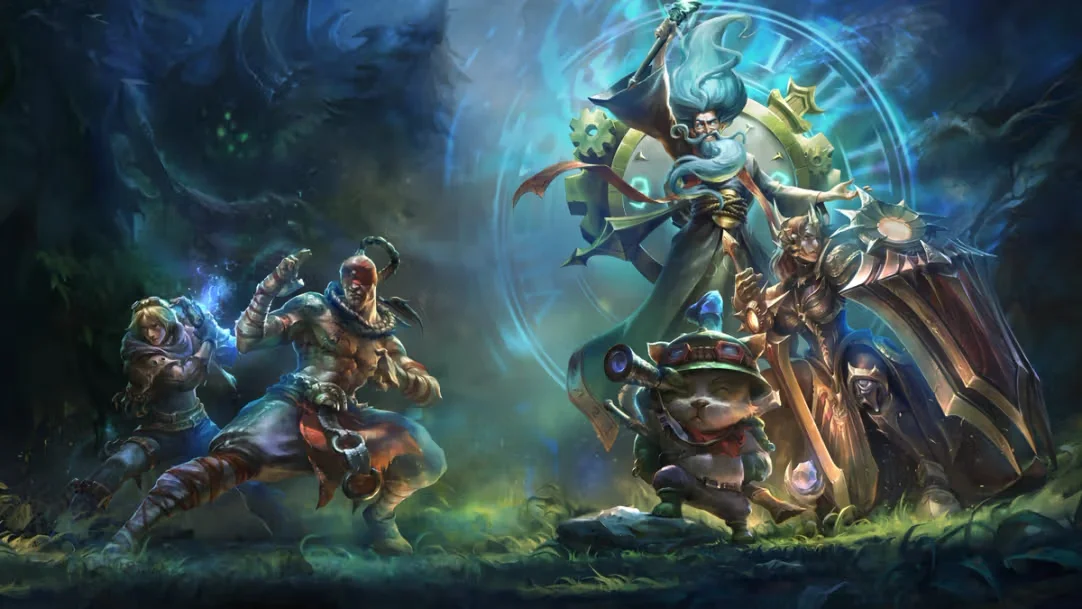
League of Legends Classic is a new game mode inside the existing League client that strips away years of reworks and replacements and reassembles the best parts of early-era League. It launched July 29, 2026 with Patch 26.15, starting with 60 champions, the old Summoner’s Rift, pre-rework champion kits, classic Runes and Masteries, and several Summoner Spells that have not been playable for years. If you have ever wanted to play AP Master Yi or AD Alistar without digging up a private server, this is that experience — built on modern servers, with current matchmaking and ping options.
What is League of Legends Classic?
League of Legends Classic is a distinct game mode embedded in the live League client. It does not require a new account or a separate installation. After Patch 26.15 updates, Classic appears as a selectable queue alongside the standard game. Champion ownership carries over where the roster overlaps, and any missing champions can be unlocked through Classic Levels, Influence Points, or the free champion rotation.
Riot anchored Classic around Season 3 as its primary reference point, then pulled in champions, items, mechanics, and Summoner Spells from other early eras to round it out. The result is closer to a curated greatest-hits collection than an exact recreation of any specific patch. Slower combat, heavier resource costs, and the old item system are the biggest immediate differences from modern League.
| Detail | Information |
|---|---|
| Release date | July 29, 2026 |
| Launch patch | Patch 26.15 |
| Historical anchor | League of Legends Season 3 |
| Starting champions | 60 |
| Main PvP queue | Draft |
| Traditional Ranked | Not at launch |
| Additional modes | Co-op vs AI, Custom Games, ARAM Mayhem |
| Separate game required | No |
League of Legends Classic basics
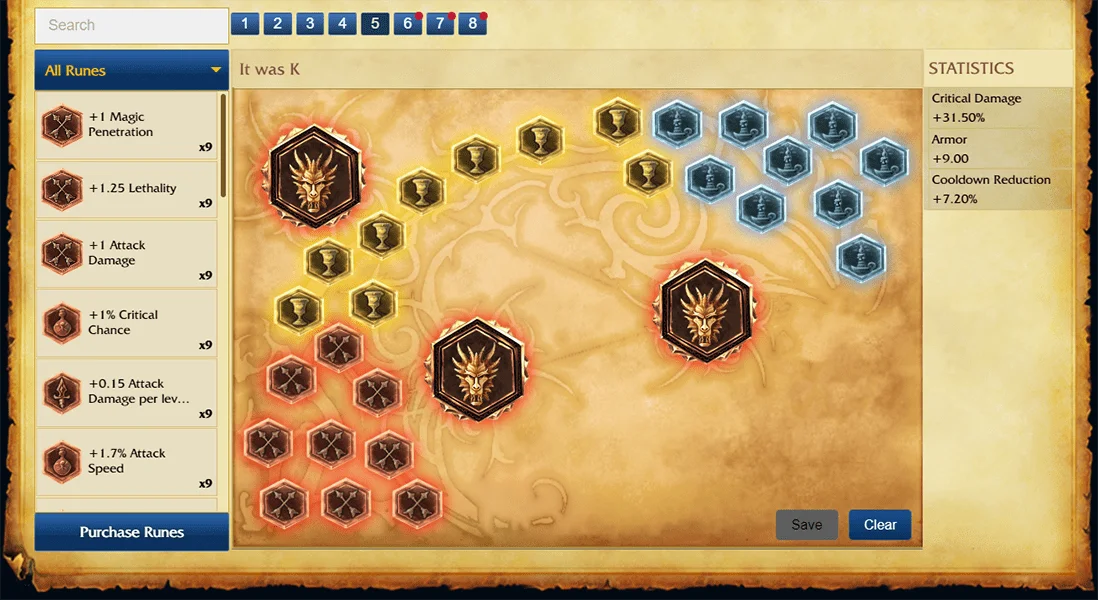
Classic gameplay is built on three interconnected systems that no longer exist in modern League: the old item catalogue, the stat-based Rune system, and the Mastery trees. All three work together and shape how champions perform before the first minion spawns.
| System | What returns | Key detail |
|---|---|---|
| Items | Almost every early-era item | Atma’s Impaler, Frozen Mallet, Deathfire Grasp, Zz’Rot Portal, gold-per-10 items |
| Runes | Old stat-based Runes | All begin at Tier 3 — no grinding through weaker tiers |
| Rune Pages | Custom Rune setups per champion | Three pages at account start |
| Extra Rune Pages | Additional build slots | Two from Classic Levels; more purchasable with Influence Points |
| Masteries | Old Mastery trees with assignable points | Fully unlocked at Classic Level 4 |
| Summoner Spells | Early and long-removed spells | Fortify confirmed; Rally and Revive shown in reveal materials |
| Influence Points | Classic currency earned by playing | Used for Rune Pages, champion unlocks, and other Classic purchases |
Items
Nearly every item from League’s first several years is back: Atma’s Impaler, Frozen Mallet, Deathfire Grasp, gold-per-10 items, and Zz’Rot Portal among them. Early-era items did not cleanly separate roles the way modern items do, which means fighters can reasonably mix health, critical strike chance, and resistances on the same build, and supports can stack multiple passive gold items before completing their main build. The return of the full old item catalogue is what makes classic-era builds like Atmogs and Deathfire mages actually functional again.
Rune system
Runes are placed into Rune Pages before a match and provide flat statistics — attack damage, magic penetration, armor, critical strike chance, and many others. Every Rune in Classic starts at the old Tier 3 baseline, so there is no need to purchase inferior tiers and slowly upgrade them over time. Each account begins with three Rune Pages, Classic Levels unlock two more, and additional pages can be bought with Influence Points. Riot has said they plan to adjust underused Runes over time without removing the unconventional builds that gave early League its character.
Masteries
Mastery pages return as a separate system from Runes, with a pool of points to distribute across Offense, Defense, and Utility trees. They change damage output, resistances, cooldown reduction, and early-game resource management in ways that affect build planning before you have even picked up a single item. All Mastery pages and their full point allocation become available at Classic Level 4. Riot includes a default Mastery page for players who forget to select one before a match — it is not optimal but it prevents entering without any stats.
Summoner Spells
Classic restores old Summoner Spells that were removed from modern League years ago. Fortify is directly confirmed. Reveal materials also showed Rally and Revive in the spell selection screen. The final launch state of each spell may change before Patch 26.15 goes live.
League of Legends Classic gameplay
Classic plays slower and more punishingly than the current game. Abilities cost more mana and deal significantly more damage when they connect. Dashes and projectiles move at slower speeds. Crowd control durations are longer. A single careless spell rotation in the early game can empty a mana bar before the next fight starts. Modern League frequently gives players recovery options after a bad engage — Classic makes the first mistake stick more often. Positioning and cooldown awareness matter more than they do in the current version of the game.
Summoner’s Rift map
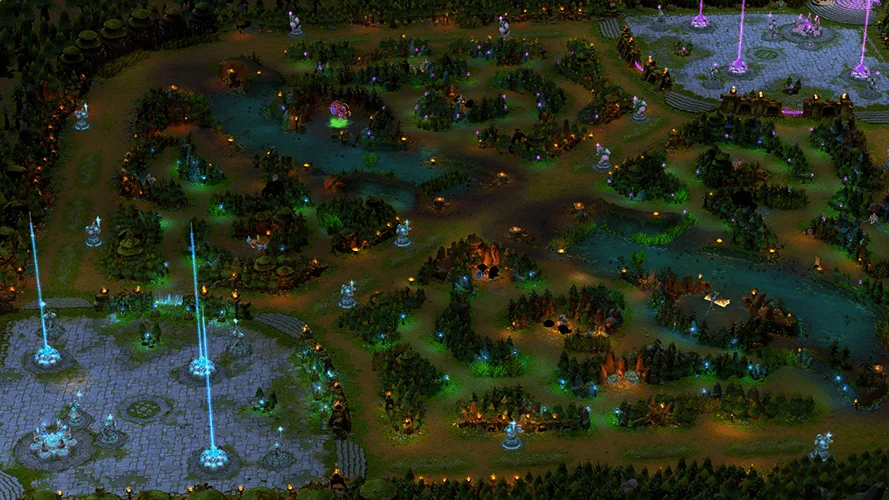
Classic features an early version of Summoner’s Rift. The old jungle camp layout returns, including Wraiths and the additional monsters placed near the Red and Blue Buff camps. Jungle monsters deal more damage and respawn faster than in modern League. An unprepared first clear — especially on a weaker early jungler — can go wrong quickly without enough Health Potions. Riot adjusted lighting, shadows, and visual clarity for cleaner fights, but the map shape and atmosphere are kept close to the original.
Modern features retained
Riot kept several quality-of-life improvements from the current client running alongside the old combat systems:
- Updated matchmaking and modern server infrastructure
- Current ping options and performance improvements
- Spell buffering
- Positional preferences
- Optional WASD controls
- Regular balance updates
The result is classic mechanics without the technical problems that came with the old client.
League of Legends Classic champions
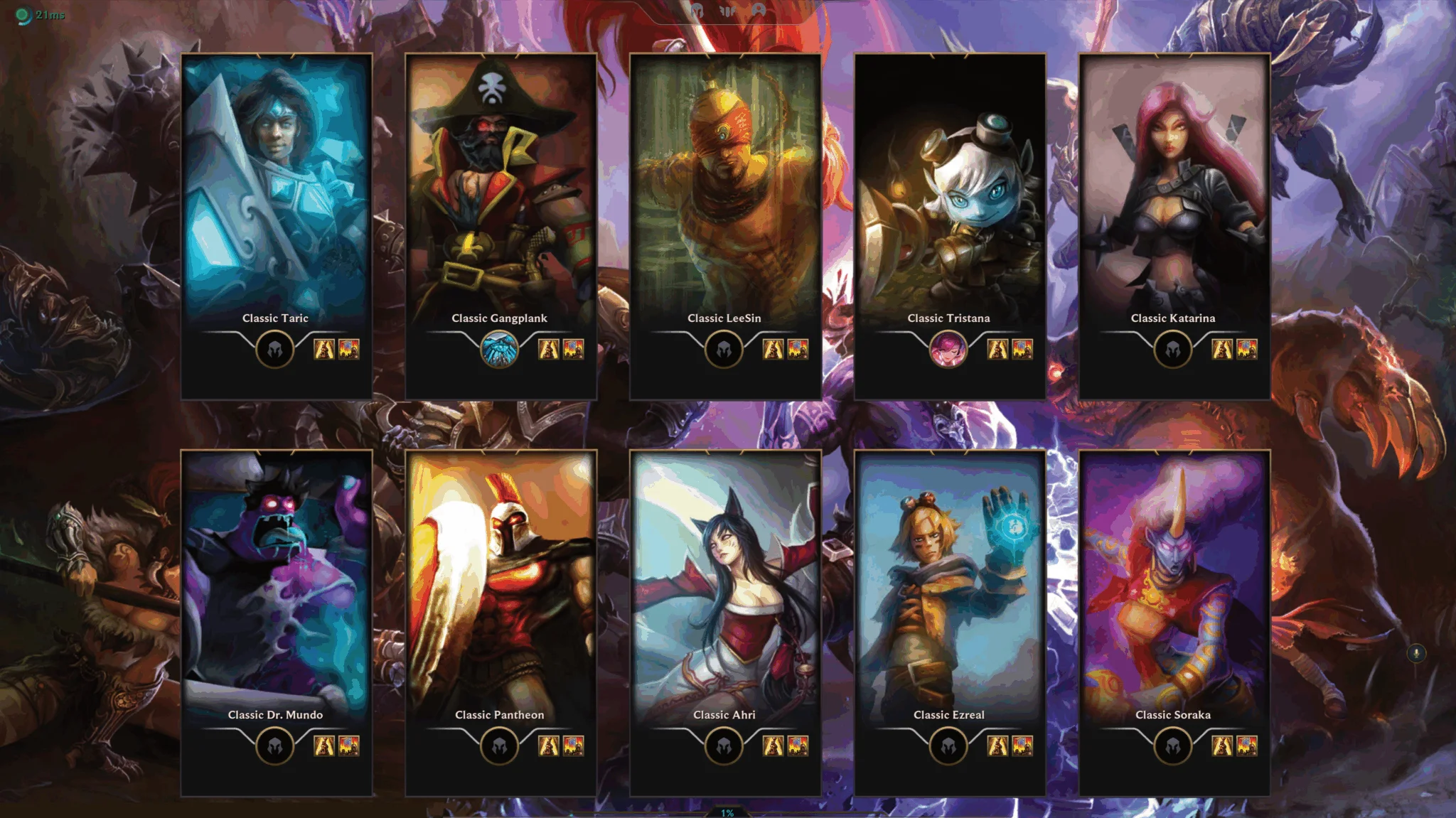
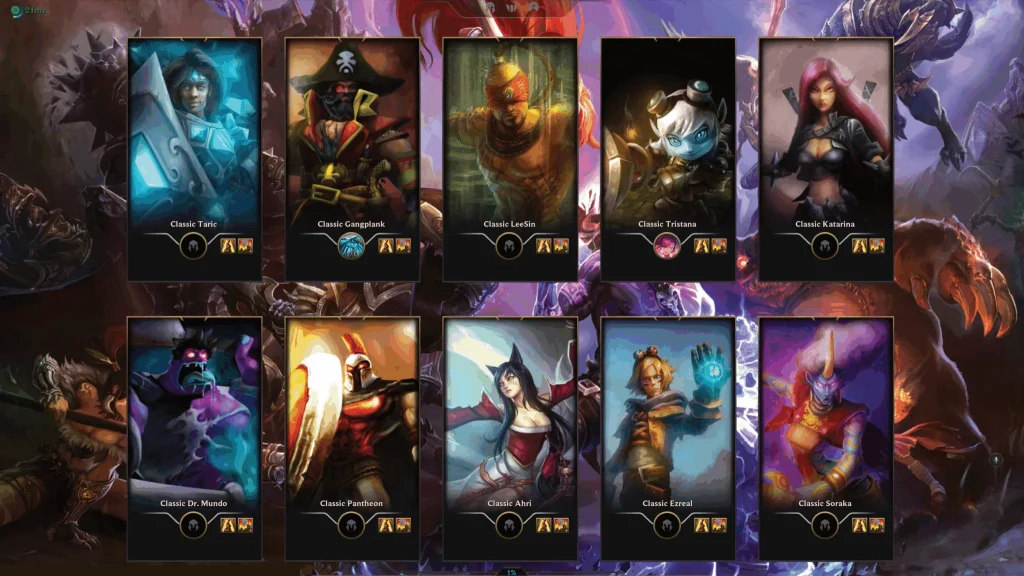
Classic launches with 60 champions: the original 40 from the game’s early years, plus 20 selected from the 2009–2013 release window. Riot has confirmed plans to add more champions after launch, with The Council — a community voting system — helping determine which champions arrive and in what order.
Full launch roster
Ahri, Alistar, Amumu, Anivia, Annie, Ashe, Blitzcrank, Brand, Cho’Gath, Corki, Dr. Mundo, Evelynn, Ezreal, Fiddlesticks, Gangplank, Garen, Gragas, Heimerdinger, Janna, Jarvan IV, Jax, Karthus, Kassadin, Katarina, Kayle, Kog’Maw, Lee Sin, Leona, Lulu, Lux, Malphite, Malzahar, Master Yi, Miss Fortune, Morgana, Nasus, Nidalee, Nunu, Olaf, Pantheon, Rammus, Ryze, Shaco, Singed, Sion, Sivir, Skarner, Sona, Soraka, Taric, Teemo, Tristana, Tryndamere, Twisted Fate, Twitch, Vayne, Veigar, Warwick, Wukong, Zilean.
Classic champion kits
Champions use their early kits — the abilities, animations, sounds, and scaling from before Riot’s rework era began. This makes several famous builds functional again:
- AP Master Yi — double-tap burst mage built around Meditate and Alpha Strike AP ratios.
- AP Sion — point-and-click stun into Deathfire Grasp burst with the old AP Death’s Caress shield.
- AD Alistar — attack-speed fighter using the classic Headbutt-Pulverize chain with old AD scaling.
- Crit Gangplank — high-damage critical strikes combined with Parrrley crits and Raise Morale.
- Tank Evelynn — sustained melee bruiser using her old stealth kit and heavy resistances.
- Deathfire Grasp mages — burst mages pairing Deathfire Grasp with Kassadin, Katarina, or similar casters.
- Atmogs fighters — the classic Atma’s Impaler and Frozen Mallet combination on high-health melee champions.
- Gold-per-10 supports — stacking multiple passive income items to fund a main build over time.
Specific champion highlights: Fiddlesticks regains its bouncing silence. Gangplank can once again deny minions to himself to deny enemy gold. Skarner returns without his modern terrain-trap mechanics. Sion uses his old point-and-click stun with the AP scaling that made him a mage in early League.
League of Legends Classic game modes
Classic launches with one PvP queue, Co-op vs AI, and Custom Games. Riot’s intention is to support relaxed group play rather than another competitive ladder at launch.
| Mode | Available at launch | Purpose |
|---|---|---|
| PvP Draft | Yes | Standard 5v5 matchmaking |
| Co-op vs AI | Yes | Learning champions and testing builds |
| Custom Games | Yes | Private matches and testing old interactions |
| ARAM Mayhem | Yes (limited-time) | Classic-inspired ARAM with Augments |
| Traditional Ranked | No | Summoner’s Journey fills this role |
Ranked
Traditional Ranked is not available at Classic launch. Riot describes the mode as a place to play with friends rather than another demanding LP grind. Competitive progression exists through Summoner’s Journey instead — a separate ladder that does not split friends by rank. You can queue with someone who has climbed much further without a skill-bracket barrier blocking the match.
Role selection
Players set their position preferences in order of priority before matchmaking. The system prioritises the highest-ranked preference and tries to avoid assigning the lowest, but queue times take precedence when needed. Second or third-choice role assignments happen when matchmaking cannot accommodate everyone’s first pick.
ARAM Mayhem
ARAM Mayhem Classic launches alongside League Classic as a limited-time queue. It uses a Classic-inspired map and old items, but augments with themed Augments not present in the main Classic mode. Only the 60 Classic champions can appear, but they use their modern versions rather than their old kits. This is a separate mode from the main Classic queue.
League of Legends Classic progression
Classic Levels
Classic Levels form a free, permanent progression track earned by completing matches. Unlike seasonal progression, these levels do not reset — they are account-wide unlocks that accumulate over time. Early levels arrive quickly. Rewards across the track include:
- Runes and additional Rune Pages
- Access to full Masteries at Level 4
- Influence Points and Blue Essence
- Summoner’s Journey access at Level 10
- Access to The Council voting system
- Several cosmetic rewards including the Rustier Blitzcrank skin
Summoner’s Journey
Summoner’s Journey unlocks at Classic Level 10 and acts as the mode’s competitive ladder. It runs from Salt at the bottom through Wood and multiple tiers up to Legend at the top. Riot expects only a small fraction of players — a single-digit percentage — to reach Legend rank. The system requires consistent play and genuine skill, but because it does not use traditional matchmaking gates, a high-ranking player can still queue with a new one without the match being declined.
Classic Pass
Seasonal Classic Passes add time-limited reward tracks with both free and paid tiers. Rewards include Influence Points, Blue Essence, Rune Pages, and cosmetic unlocks. Full launch pass details, price, and reward order have not been announced ahead of Patch 26.15.
League of Legends Classic cosmetics

Classic cosmetics restore early champion appearances rather than applying modern skins. These are separate items — not a visual toggle on existing skins — and they only function inside League of Legends Classic. Classic Chromas and Portraits carry the same restriction.
| Cosmetic type | How it works |
|---|---|
| Classic Skins | Restore older champion appearances, obtainable via Classic Skin Tokens |
| Classic Skin Tokens | One token unlocks a chosen Classic Skin — works for later releases too |
| Classic Chromas | Alternate colour versions of Classic Skins |
| Portraits | Change the artwork shown on the loading screen |
| Emotes | Cosmetic rewards from progression tracks |
| Titles | Displayable player titles earned through Classic play |
Classic Skin Tokens are obtainable through the Seasonal Pass track or the in-game Shop. Many skins you already own from the modern game will work inside Classic at launch. Riot has announced plans to expand modern skin support in Classic over time.
Frequently asked questions
When did League of Legends Classic release?
League of Legends Classic launched July 29, 2026 alongside Patch 26.15 and the start of Season 3.
Is League of Legends Classic free to play?
Yes. Classic is part of the existing free-to-play League of Legends client. Access to the standard queue costs nothing. Optional purchases are available through the Seasonal Classic Pass and Shop — both have a free track option.
Is Classic a separate game?
No. It is a mode within the existing League client, connected to your current account and champion ownership. No new download or account is needed.
Is it based on a specific old patch?
Season 3 is the primary anchor, but Classic also pulls in champions, items, mechanics, and Summoner Spells from other early eras. Riot describes it as a best-of collection from early League rather than a faithful recreation of a single historical patch.
How many champions does Classic have at launch?
60 — the original 40 plus 20 from subsequent early releases. Riot plans to add more over time, with The Council letting the community vote on additions.
Is there Ranked in League Classic?
Not at launch. Competitive progression is handled through Summoner’s Journey, which runs from Salt to Legend without creating traditional Ranked matchmaking barriers between friends.
Do old Runes and Masteries return?
Yes. Old stat-based Runes return at Tier 3 baseline — no grinding through weaker tiers. Masteries are fully available at Classic Level 4.
Can you use your modern skins in Classic?
Many existing skins work in Classic at launch. Riot plans to expand the list over time. Classic-specific skins and Chromas only function inside the Classic mode and do not carry over to the main game.
What is The Council?
The Council is a community voting system accessible after reaching a certain Classic Level. It lets players vote on future champion additions to Classic and their release order.
Does Classic support WASD controls?
Yes. WASD movement is an optional control scheme alongside the standard mouse-click controls.